
Papa Loco: A Cold, Chaotic, and Confidence-Boosting Half Marathon
The week leading into Papa Loco wasn’t clean.
The Saturday before, I ran thirteen miles at 6:06 pace. Controlled, steady, exactly how I wanted to open the build. Sunday I flew to Houston for work and logged ten miles at 6:22 pace after landing. Monday became treadmill miles in freezing temperatures. Then a snowstorm hit, extending the trip another day.
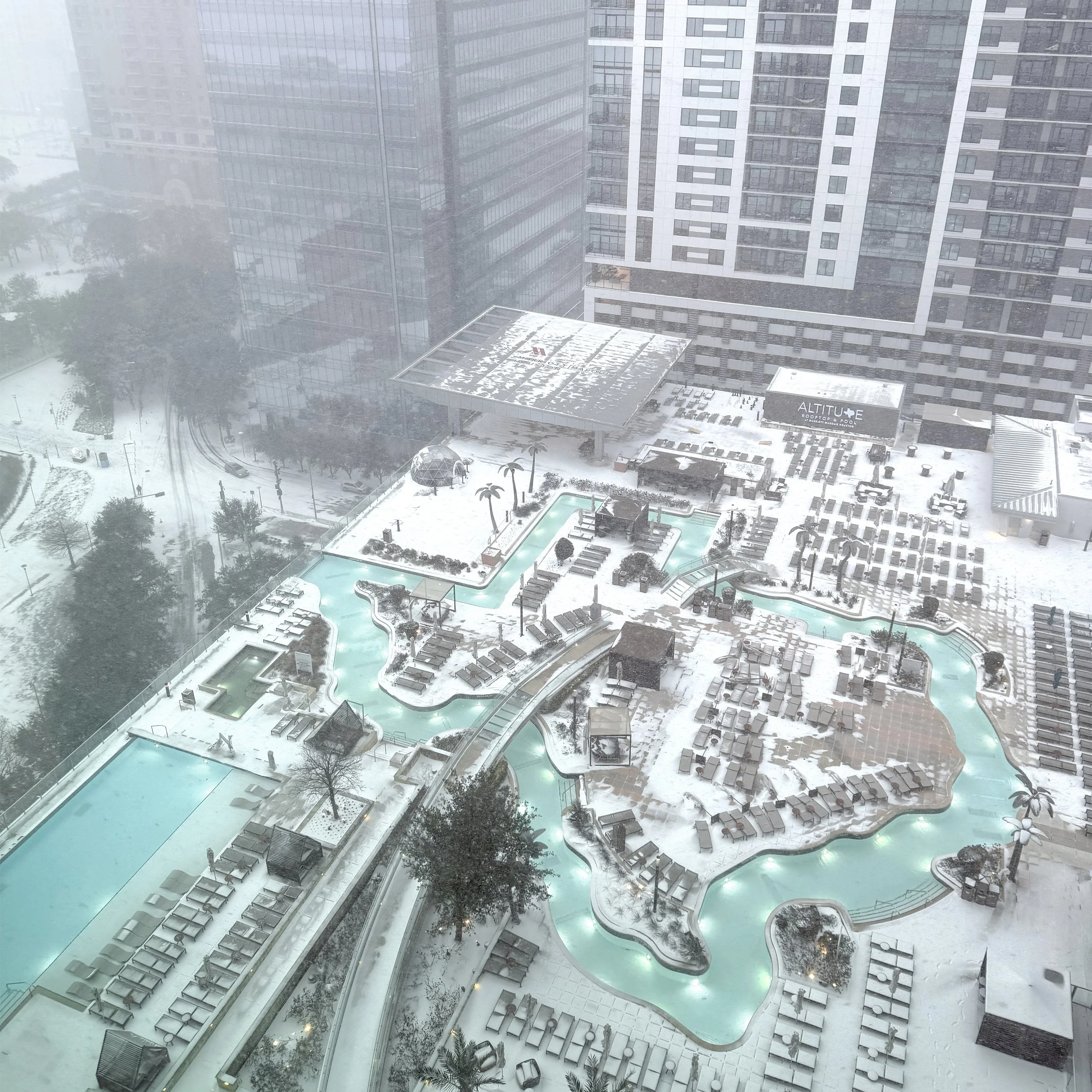
Tuesday’s intervals moved indoors. Wednesday morning, unsure whether flights would move again, I logged more treadmill miles before finally making it home. I went straight from the airport to a thirteen-mile run at 6:29 pace. It felt strong — better than the circumstances warranted — but the rhythm of the week had already turned improvised.
Despite the disruption, Steven, Andy, and Matt pushed the idea: race something before the marathon. Get sharp. Feel the edge of competition again.
Papa Loco fit the window.
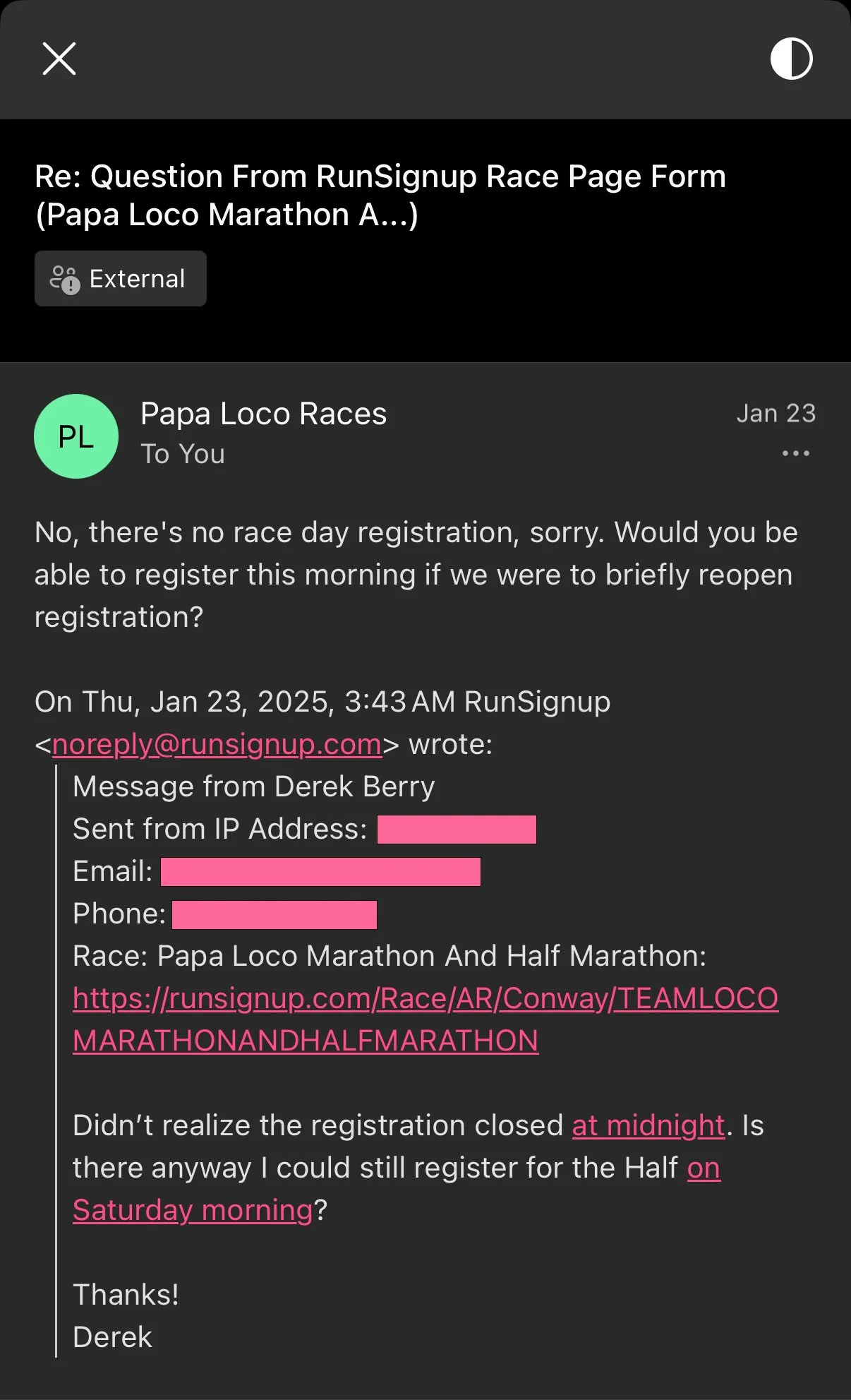
Early Thursday morning, I woke at 3:30 a.m., realized I hadn’t actually registered, and messaged the organizers in a half-awake panic. They reopened registration for a few hours. I signed up and went back to sleep.
Later that day, I completed the planned interval session. Three times two miles at marathon pace minus ten seconds, with controlled recoveries. Ten miles total, just over 6:00 average. The work was landing.
Friday was a quiet seven-mile shakeout.
My only real concern going in was the cold. The forecast hovered in the mid-20s. I packed more layers than necessary, pinned my bib carefully, and told myself I’d adjust at the line.
Race morning in Conway was 24 degrees. Seat warmers on full blast. The plan was simple: run, then drive to Springfield for a long-planned night with friends.
I arrived with just enough time for a banana and a quick wardrobe change — or so I thought. When I reached into the back of the truck, I realized I’d left my clothes bag at home. What I had on was what I would have to warmup and race in: half tights under joggers, a base layer, running t-shirt, arm warmers, a cut-off Drury Cross Country hoodie, and an oversized beanie. Over all of it, a red Patagonia puffy.
It wasn’t streamlined. I warmed up anyway.
By the time we lined up, it was 27 degrees with a wind chill closer to 24. I ditched the joggers and puffy, swapped the beanie for a lighter one, and settled in.
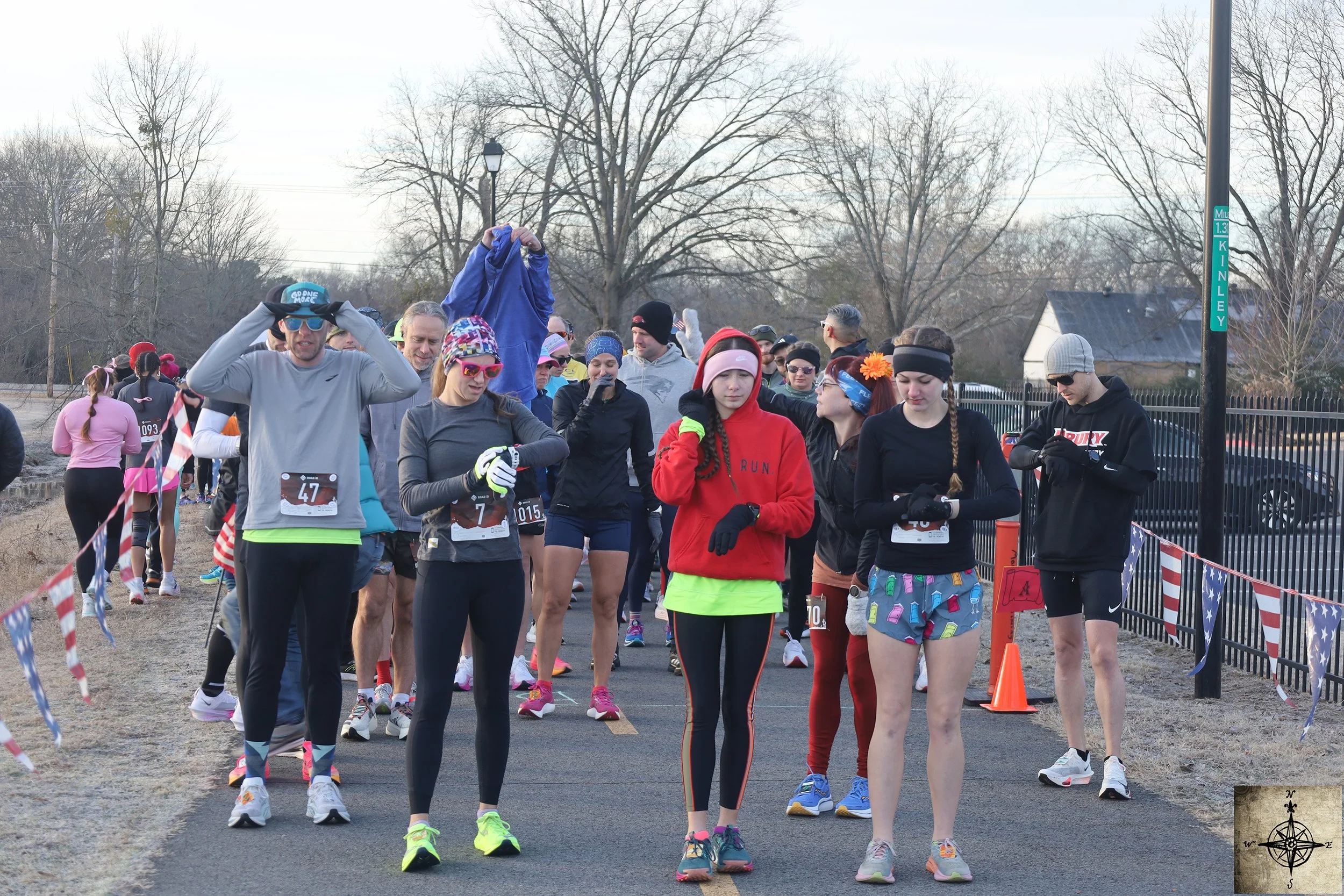
The course was a 2.68-mile out-and-back trail loop. My intention was to simulate marathon rhythm. Thirteen miles at six-minute pace. Controlled. Disciplined. The Nike AlphaFlys were on for the first time in a race.
The start moved quickly. After the first 400 meters, I was by myself. I found my rhythm, and settled in. The pace felt comfortable in a way I hadn’t expected — not forced, not managed. Just there.
At the first turnaround, I realized I was completely alone.

It took a moment to register. Thirteen years away from competition, a forgotten clothes bag, a week of treadmill miles in Houston, and I was leading a race. Not a significant race. But a race. The feeling was uncomplicated and familiar. Something I hadn’t realized I missed until it returned.
Running back through the field on the return leg was loud and disorienting in the best way. Runners coming toward me, small nods, a few shouts. The community of it — a field of people moving for the same reason — was something I hadn’t fully understood until I’d gone without it for a decade.
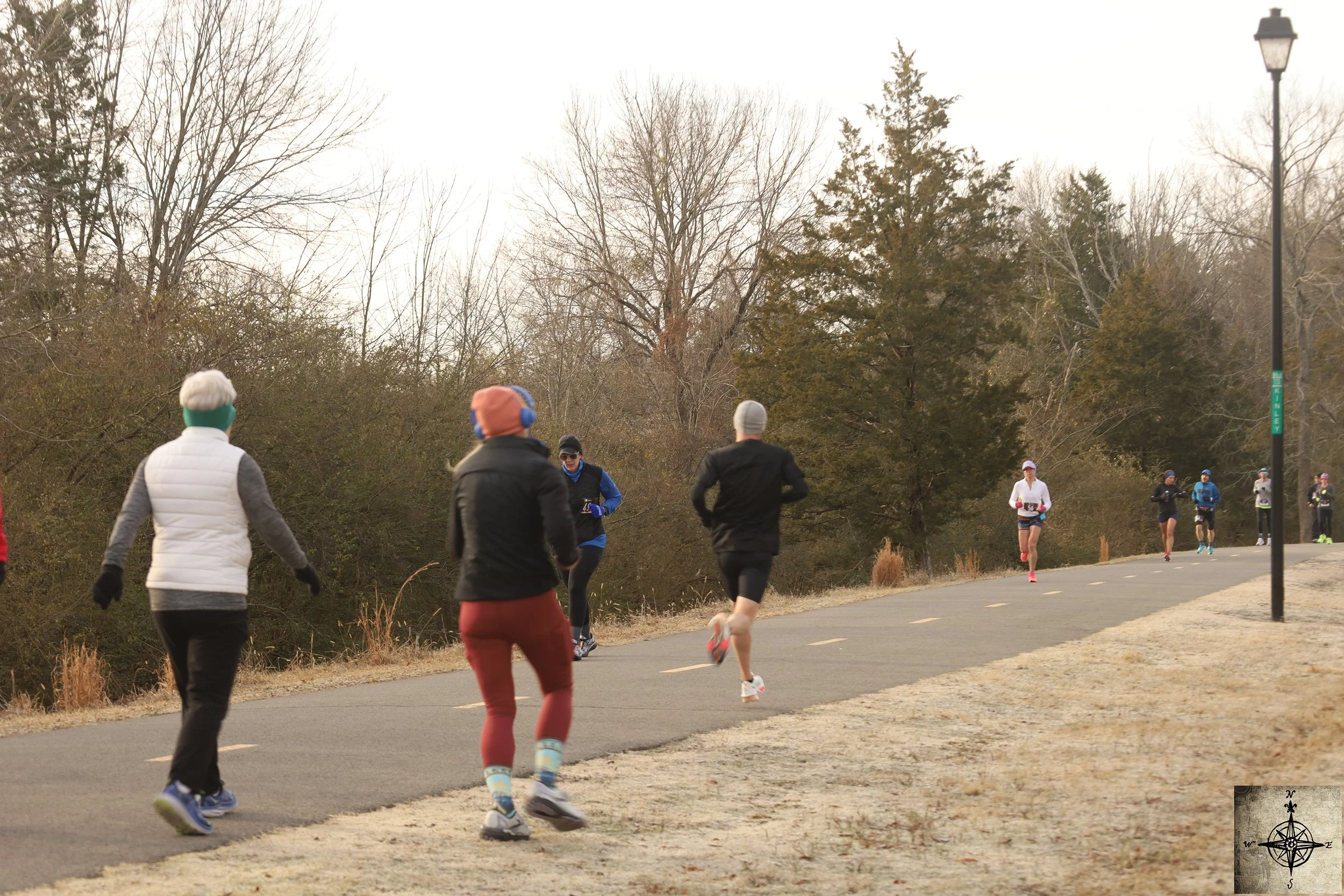
On the second turnaround, fumbling with the hoodie and distracted by the rhythm of the course, I overran the mark by roughly 200 meters. No cones. No clear line. I corrected and kept moving.
The rest of the race settled into a steady grind. The cold never faded. I took my gels as planned — SiS at 30 minutes, another at 60 — though opening them with frozen fingers required more focus than the pace itself. I had to stop briefly to tear one open.
I crossed the line first.
The race clock showed 1:14-something as I passed. A missed chip read from one lap produced an official time of 59:27. Strava later put the full effort at 1:13:05. The exact number mattered less than what it confirmed: no taper, improvised gear, a week of disrupted training — and the fitness was there.
Running in the 1:13s under those conditions made 2:30–2:35 feel less speculative. The Alphaflys delivered efficiency and reminded me to respect the calf. Cold hands complicate small tasks — worth practicing fueling in every condition before race day.
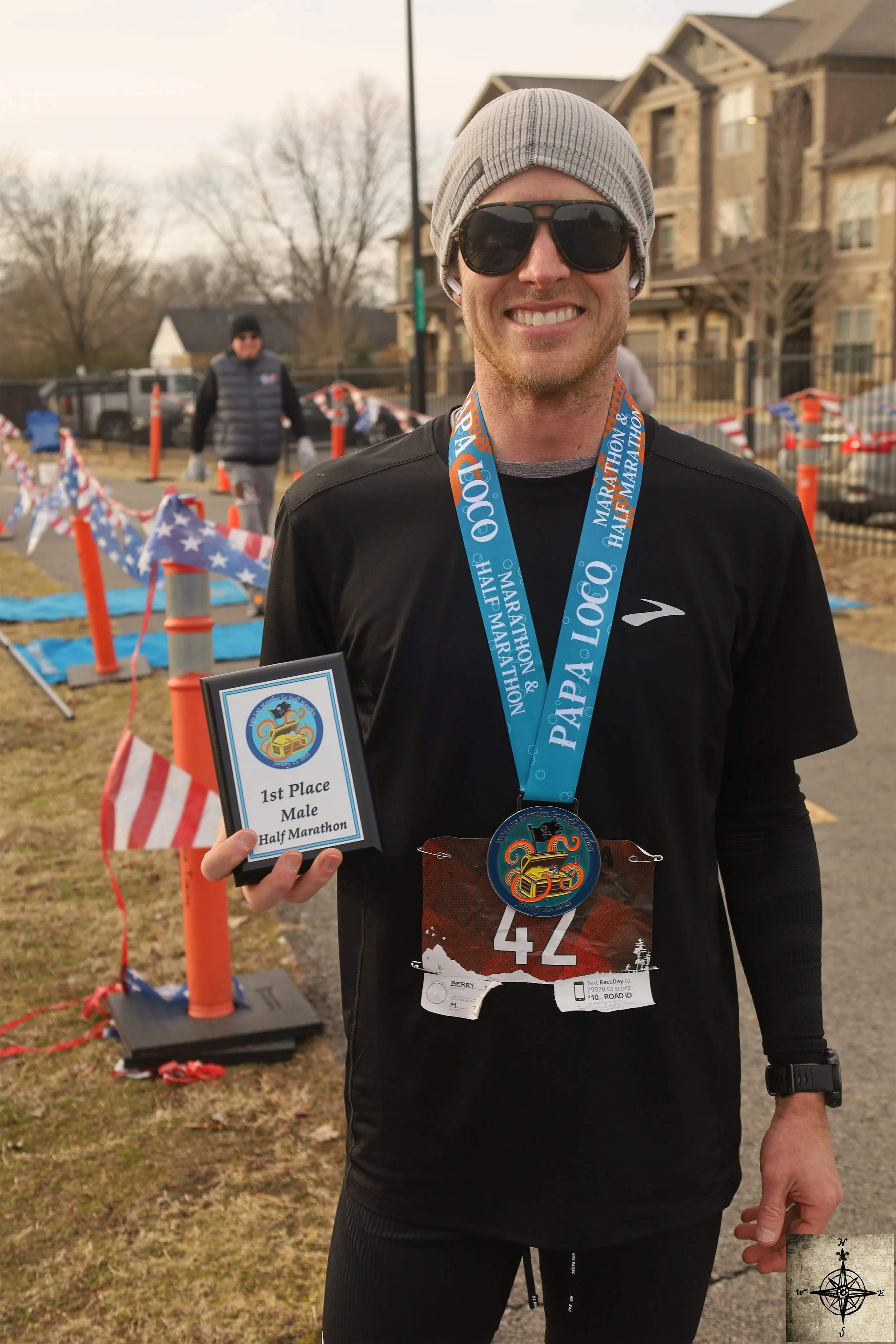
I drove north that afternoon, met friends for Chinese food, cheap beer, and ping pong, then logged an easy recovery run with Steven the next morning before heading back to Little Rock.
Training rarely unfolds cleanly.
This one didn’t need to.
It did what it was meant to do.

