
Navigating the Pre-Race Anxiety Maze: Little Rock Marathon Strategy
As race day approached, the question shifted from if I was ready to how I would race.
Training had gone well. There was evidence for something ambitious — perhaps sub-2:30. But there was also a quieter, more rational voice suggesting restraint. A 2:36 felt controlled. Achievable. Respectable for a first marathon back.
The gap between those two outcomes was less than twenty seconds per mile.
In a marathon, that’s everything.
Like most complicated decisions in my life, a spreadsheet appeared. I mapped scenarios: steady 6:00 pace throughout, negative splitting from the start, or pushing early and managing the damage late. The more scenarios I built, the more uncertain I became. There’s a point where optimization stops clarifying and starts compounding doubt.
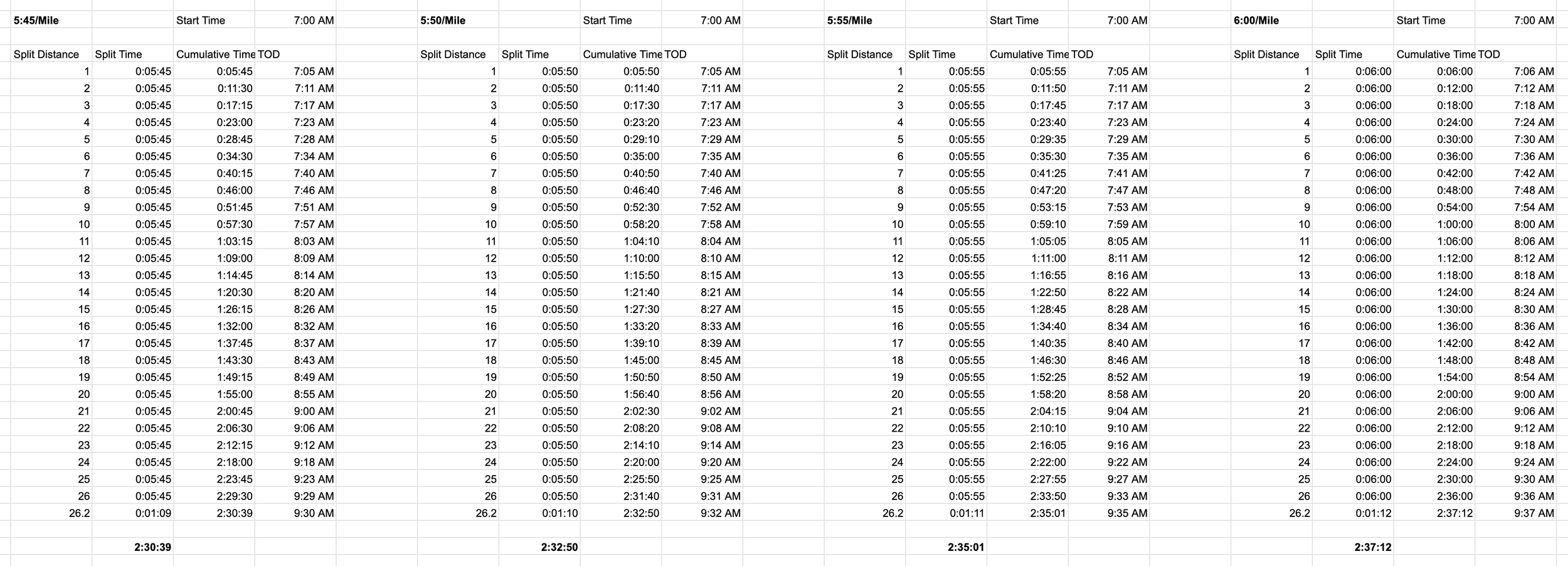
So I stepped away and called the people who had carried this journey with me.
Steven leaned toward aggression. If the fitness suggested sub-2:30, why not commit to it? His belief was uncomplicated and sincere.
Andy offered a steadier perspective. A 2:36 — even a 2:40 — would still represent a meaningful return. The marathon rewards patience more than ambition.
The spread between those opinions widened the internal debate.

My final call was to Matt, our former captain and the most measured voice in our group. We spoke for nearly an hour. I laid out every scenario, every split, every projection. He listened, then reminded me of something simple: fitness sets a ceiling, but execution determines the result.
A sub-2:30 was possible — but it required near-perfect pacing, fueling, weather, and composure. Debut marathons rarely unfold perfectly.
We reframed the question.
Instead of chasing the perfect race, we would chase the race with the highest probability of success. A 90% outcome, not a 100% fantasy.
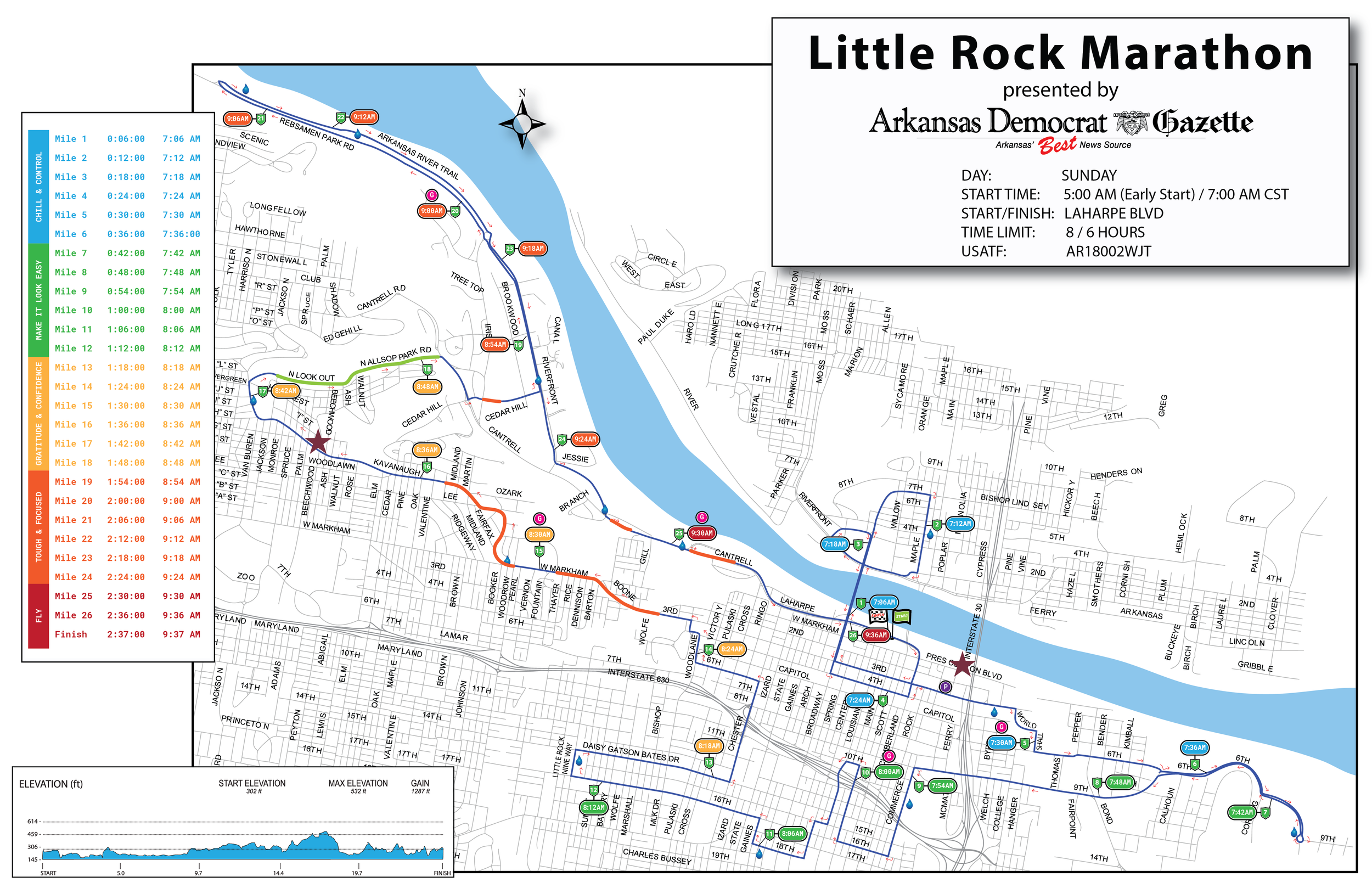
The plan broke into five sections.
Miles 0–6: Chill & Control
I have a history of starting too fast. Race adrenaline shortens perspective. The goal was restraint — settle just under six-minute pace, conserve energy, and let the race come to me. Not a single second faster than necessary.
Miles 7–12: Make It Look Easy
Hold rhythm. Let the effort stay quiet. The name came from a video of Kenyan runners on a treadmill, their coach repeating it over and over — make it look easy. Reach halfway feeling composed rather than tested. If it looked easy, it probably was.
Miles 13–18: Gratitude & Confidence
This stretch included the hills and the roads near my house — the terrain where most of the training miles had accumulated. The neighborhoods I’d run through in the dark, in the heat, in the middle of long weeks when the marathon felt distant. Here the goal was perspective as much as pace. Stay patient. Let the familiar ground do its work.
Miles 19–24: Tough & Focused
The river trail. Flat. Exposed. Unforgiving. This is where marathons reveal intent. No negotiation. No recalculation. Stay present and hold what the earlier miles had built.
Miles 25–26.2: Fly!
If there was something left, use it. No spreadsheets. No projections. Just the remaining margin, spent completely.
The scenarios quieted. The spreadsheet closed.
The goal was no longer to prove what the training suggested at its ceiling. It was to execute a disciplined race that reflected the work honestly — and to find out, for the first time in thirteen years, what I was capable of over 26.2 miles.
I had spent months preparing for the question.
Race day would answer it.
